GEMS OF BOLLYWOOD
Babri Structure Demolition: A Symbol of Hindu-Muslim Unity (An updated version of my 14-year-old…
Babri Structure Demolition: A Symbol of Hindu-Muslim Unity
(An updated version of my 14-year-old analysis that first brought Babur's child exploitation and the origin of the name Babri into mainstream discussion)
Introduction
If someone were to ask me what has been the greatest episode of Hindu-Muslim solidarity ever, the reply would be unambiguous and clear.
Now, I am not a professional historian like Romila Thapar or D.N. Jha. Nor am I an eyewitness to the centuries of invasions of India by "art-lovers" such as Muhammad bin Qasim, Ghori, Ghazni, Alauddin Khilji, the Mughals, and Nadir Shah, to name a few.
Thus, I may not have the full details of all the episodes and examples of Hindu-Muslim solidarity that have occurred in the last 1,400 years since the emergence of Islam.
For this reason, I will also not delve into debates about whether Islam spread in India by the sword, as alleged by so-called Hindu fundamentalists like me, or through artistic performances of tribal invaders from West Asia, as claimed by Zakir Naik and certain secular historians from JNU.
For centuries, these invaders—paraded as "lovers of art" by certain sections of academia—unleashed unparalleled brutality.
Their legacy of bloodshed and cultural destruction is well-documented, and yet, remarkably, some still choose to glorify them.
Let us not mince words: the narrative of "artistic invaders" is a smokescreen, concealing a history of plunder and desecration.
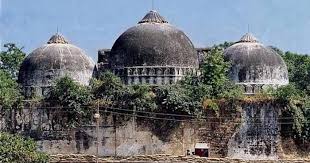
However, I cannot recall any event that surpasses this one as the most exemplary episode of Hindu-Muslim solidarity. Do not be surprised—I am referring to the destruction of the Babri Structure on the auspicious day of December 6, 1992.
This was the grand day when thousands of noble-hearted and patriotic Hindus demolished a structure that had stood as one of the greatest insults to Bharat and Islam for centuries.
They did this despite the knowledge that they would face torturous court trials, condemnation from the media establishment dominating the country, and significant political, social, and cultural victimization.
Regardless of these perils, they courageously destroyed a symbol of humiliation that should have been dismantled by Muslims themselves long ago.
I would appeal to the government to officially declare December 6 as Hindu-Muslim Unity Day, Day of Pride, or Bravery Day. It stands as a stark reminder of what true solidarity looks like.
Some of you may think that I have lost all sense or have become devilish to proclaim the destruction of a structure associated with Islam as a day of Hindu-Muslim solidarity. You may demand explanations for such a seemingly preposterous statement. That explanation is coming—read on.
I will not engage in debates over whether a Ram Mandir actually existed on the site of the Babri Structure.
Nor will I debate whether Sri Ram—the greatest icon for all of humanity—was born here or elsewhere.
I will also not argue whether a Ram Mandir should be constructed on this site or if a hospital, as suggested by some intellectuals, would be a better alternative.
These points are distractions and completely irrelevant to this issue. Unfortunately, they have been the focus of debates for years and continue to dominate discussions, wasting valuable time and attention.
Because we all know the truth. These mischievous debates emerged only to silence the irrefutable truths.
The bottom line, however, is this: even if you disagree with the truth, the Babri Structure still deserved outright demolition the moment India gained independence.
The Kar Sevaks merely carried out the work that the government should have done 45 years earlier.
The reason is simple: the Babri Structure was NOT a mosque in the first place.
Why?
Because Babur, who commissioned it, would not be considered a Muslim by today’s standards.
In fact, if Babur were alive today, his actions would have led to him being stoned to death in any Muslim-majority country.
Babur was a disgrace to Islam. To understand why, we do not need to rely on claims made by Hindu fundamentalists or biased right-wing historians. Instead, let us turn to Babur’s own autobiography, Baburnama, which is available in all prominent languages.
For the purpose of this article, we shall refer to the English translation of Baburnama by Annette Susannah Beveridge, published in 1922.
This translation was done directly from the portions of the original Turkish manuscript that were available.
These excerpts are sufficient to establish the true character of Babur. A scanned copy can be downloaded from http://archive.org.
His words, not ours, indict him.
Babur: The Homosexual, Drunkard, and Child Molester
Babur’s autobiography clearly establishes him as a compulsive homosexual and child molester.
Those defending the Babri Structure should first explain whether Islam justifies homosexuality and child molestation.
If not, Babur was a disgrace in the name of Islam, and any structure built by him is equally a disgrace to the faith.
On pages 120-121 of Baburnama, Babur admits he was not much interested in his wife but was instead maddened by a boy named Babri. He confesses that he had not loved anyone as passionately as he loved this boy and even composed verses in his admiration.
For example:
"There has been no lover except me who is so sad, passionate, and insulted. And there is no one more cruel and wretched than my lover!"
Babur recounts how Babri would come close to him, leaving him so excited that he was unable to speak. Due to his intoxication, he could not even thank Babri for his affection.
Babur describes an incident where, while roaming with his friends, he encountered Babri in a lane. He was so overwhelmed by excitement that he lost the ability to speak or even look at him.
He narrated:
"I get embarrassed looking at my lover. My friends leer at me, and I leer at someone else."
He admits that in the passion and desire of his youth, he became so consumed that he roamed around bareheaded and barefoot, oblivious to everything around him.
In another passage, Babur writes:
"I used to get mad in excitement and passion. I could not think that lovers have to face this. I could not go away from you, nor can I stay with you due to the high level of excitement. You have made me completely mad, O my (male) lover!"
The Implications:
From these admissions, it is evident that:
A. Babur and his associates engaged in homosexual relationships and child molestation. Under Islamic Shariat law, the punishment for such acts is death by stoning—a penalty still enforced in many Islamic countries today.
B. The Babri Structure is nothing but a memorial to Babur’s sexual victim who happened to be a child.
This raises a critical question:
Does Islam consider monuments created by or named after individuals with such reprehensible behavior to be mosques or symbols of pride?
It is clear that the Babri Structure was nothing more than a symbol of forced homosexuality and child molestation.
While I do not know the identities of those who were involved in its destruction, they eradicated a structure of shame for both Hindus and Muslims.
It is deeply shameful that a structure symbolizing India’s subjugation by individuals of such questionable character was regarded as a heritage site.
If this precedent is acceptable, then perhaps the Mumbai CST station, where Pakistani terrorists openly fired on innocent civilians, should also be renamed "Kasab Bhoomi" as a heritage monument!
Babur: The Barbaric Killer, Looter, Rapist, Drunkard, and Drug Addict
(Only a few samples from Babur’s vulgar and barbaric autobiography, Baburnama, are being provided here as it is too brutal and grotesque for detailed reading.)
Page 232:
Babur writes about how his gang beheaded innocent Afghans who had come to him seeking a truce. Their severed heads were then used to construct a pillar. A similar act was repeated in Hangu, where 200 Afghan heads were killed to create another pillar.
Page 370:
Babur describes massacring more than 3,000 people in Bajaur simply because they did not believe in Islam. Their wives and children were taken captive.
Page 371:
Several heads of captured people were sent to Kabul, Balkh, and other regions to spread news of his victory.
Page 371:
Babur constructed a tower of severed heads on the ground to commemorate his victory.
Page 371:
Babur writes about hosting a wine party on Muharram, where he and his associates drank throughout the night.
The translator notes that Babur was a heavy drinker.
A significant portion of Baburnama is dedicated to descriptions of his drunken revelries.
Page 373:
Babur recounts consuming intoxicants to the extent that he was unable to attend prayers. He remarks that if he had taken such intoxicants today, they would not have produced even half the level of intoxication he experienced.
Page 374:
Babur fathered numerous children from various women in his brothel. His first wife even promised to adopt all his illegitimate children, whenever they were born in the future, because several children born to her had not survived.
Babur’s brothel is depicted as functioning almost like a poultry farm for producing offspring.
Pages 385-388:
Babur describes celebrating the birth of his son Humayun by going on a boat with his friends, drinking wine throughout the night, and consuming narcotics.
The party ended in chaos as they began fighting due to intoxication.
Following another similar party, Babur writes about vomiting excessively and waking up the next morning unable to remember anything.
Page 527: Babur hosted a party in the pillared porch of the domed building in Agra (referring to the Taj Mahal, which has been falsely attributed to Shah Jahan).
Almost every page of Babur’s autobiography details his acts of looting, threatening, murdering, and plundering wherever he went, along with his consumption of 'haram' meat.
The manner in which Babur proudly includes these deeds in his autobiography reveals his lack of remorse and suggests that he took pride in his actions.
One shudders to imagine the extent of other crimes he committed that are not documented in this self-eulogizing biography.
Summary
A. Babur’s actions clearly demonstrate that he was anything but a follower of Islam.
His misdeeds are so reprehensible that they would bring shame to any individual. If some perverse interpretations still classify Babur as a Muslim under their definition of Islam, then such a definition itself is deeply disturbing and utterly unacceptable.
B. The Babri Structure, named after Babur’s homosexuality child-victim Babri, stands as a symbol of the moral depravity of a murderer, child-molester and rapist.
To refer to it as a "heritage" site and to implicate those who destroyed it reflects how far society has degraded over time.
What can be said of a family that glorifies someone who metaphorically "violated" their own heritage, enshrines him in their history books as a figure to celebrate, and protects structures tied to such acts as heritage sites?
(I apologize for the strong language, but nothing else adequately describes the extent of this glorification of historical looters.)
C. Muslims should recognize and support movements like those initiated by the RSS, VHP, and other so-called right-wing forces that have sought to remove such symbols of shame, which have been a slur on the name of Islam for centuries.
D. Muslims missed an important opportunity by not taking the lead in demolishing the Babri Structure themselves.
Instead, they had to rely on right-wing forces to protect their dignity as a religion of peace and integrity.
Now, they should proactively work toward removing the remaining symbols of shame, such as those at Sambhal, Mathura and Kashi, along with thousands of other fake structures erected by perverted rulers like Aurangzeb, Shah Jahan, Jahangir, Akbar, Humayun, and other tyrannical invaders from Muhammad bin Qasim onward.
E. Babur’s autobiography alone is sufficient to illustrate the methods by which Islam spread in India. Ideally, all Indian Muslims should return to their original Dharma—the Dharma of humanity—Vedic Dharma, by rejecting the corrupt practices and ideology brought by such invaders.
But even if this transformation seems premature due to prevailing social, political, and economic constraints coupled with widespread misinformation, at the very least, the following steps should be taken:
1. Stop Living in Delusion:
Abandon the false notion that Islam in India spread by any means other than the sword. Muslims should disassociate themselves from the perverted actions of invaders and terrorists.
Even if they choose to remain Muslims, they must stop glorifying these criminals as Muslims or considering them as noble ancestors. Instead, they should identify with our true noble ancestors, such as Ram and Krishna.
2. Avoid Visiting Certain Structures and Monuments:
Cease visiting structures and monuments constructed by these perverted invaders, as they symbolize oppression and cruelty.
3. Reject False Narratives of Artistic Contributions:
Let go of the belief that these invaders contributed artistically to India’s heritage. Recognize that most monuments attributed to them were ancient buildings captured by these invaders.
4. Take Initiative for Historical Correction:
Finally, start a movement to demolish all structures constructed by these invaders, as such structures stand as the greatest insult to the all-powerful Allah.
Sambhal, Kashi and Mathura would be exemplary starting points for this effort.
I appeal to all my Muslim brothers and sisters to join hands with the right-wing forces who destroyed or called for the destruction of the Babri Structure—a symbol of shame for Islam—and to take this remarkable example of Hindu-Muslim solidarity a step further.
These forces are the greatest friends of Muslims and true patriots of this country.
I also urge everyone—Hindus and Muslims alike—to proactively celebrate December 6 as Swabhiman Diwas, Shaurya Diwas, Dignity Day, Hindu-Muslim Solidarity Day, or National Glory Day.
For Muslims, this day can also be observed as Glory to Islam Day!
Vande Mataram
#ShauryaDiwas